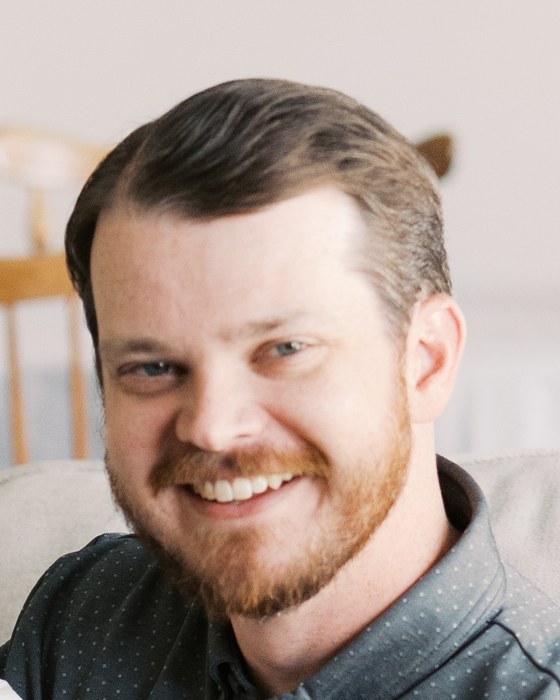
Logan Moore, Ph.D.
Assistant Professor of Exercise Science · Texas Wesleyan University
Director, Human Movement & Performance Laboratory
I study how movement and exercise promote health and wellness across the lifespan, from college students and future first responders to athletes and older adults. My work began in the laboratory, examining musculoskeletal disease (osteoarthritis, osteoporosis and sarcopenia) and the crosstalk between bone and muscle. It now extends into applied and community research on occupational fitness, injury risk and movement efficiency, and mobility and independence in later life. Undergraduates take part in every stage, and the findings come back into my classroom.
Research
My research asks one question at every stage of life: how can movement and exercise keep people healthy, capable and independent? It runs from cellular mechanisms of bone and muscle health to applied studies with students, first responders, athletes and older adults in the community.
Occupational healthFitness readiness for first responders
Most criminal justice students in our pilot could not pass all four physical assessment events required for academy entry. This study follows cohorts through a fitness course built to close that gap.
- Sam Taylor Fellowship, PI (2025, renewed 2026)
- Cohort 1 presented at Texas ACSM 2026; cohort 2 in progress
Healthy agingMobility and independence in later life
Fitness assessment and exercise prescription for adults over 65, delivered by students through a community partnership, alongside lab work on osteoarthritis and sarcopenia.
- Senior Fitness & Assessment Clinic with the North Richland Hills Senior Center (first held April 2026)
- Mini-review of osteoarthritis mouse models in preparation
Human movementInjury risk and movement efficiency
How joint mechanics and training shape injury risk and the energy cost of movement, measured with the tools students use in lab.
- Systematic review of joint angle and ACL injury, with UT Southwestern
- Proposed study of the biomechanical and metabolic efficiency of indoor rowing training
- MoCap6, in-house six-camera markerless motion capture software for teaching and research, using cameras donated by Texas A&M
FoundationsBone–muscle crosstalk and tissue repair
The mechanistic roots of my work, from doctoral and postdoctoral training: how muscle damage affects joint tissue, and how bone and muscle repair.
- Plant-derived zein scaffolds for bone repair (UT Southwestern)
- Prostaglandin E2 and skeletal muscle damage (UT Arlington)
Student successUndergraduate researchers
Every semester, students in EXS 2304 design and run their own studies, from menstrual health in collegiate wrestlers to stretching and sprint performance and water aerobics for mobility.
- Faculty mentor for 26 course-based research groups in EXS 2304 since 2024, with six student-led posters at University College Day and the South Central American Society of Biomechanics
- Faculty mentor, Texas ACSM Student Bowl team (2026), supported by a McCann Student Development Award
- The Exercise Science Advisor app, which helps students track progress toward their degree
Select a theme to read more.
Selected publications and presentations · expand
Selected publications
Full list of publications and citations on Google Scholar →
Moore, L.,* Awad, K.,* Huang, J., Gomez, L., Brotto, L., Varanasi, V., Cardozo, C., Weisleder, N., Pan, Z., Zhou, J., Bonewald, L., & Brotto, M. (2023). Advanced methodology for rapid isolation of single myofibers from flexor digitorum brevis muscle. Tissue Engineering Part C: Methods, 29(8), 349–360. https://doi.org/10.1089/ten.tec.2023.0012 (*co-first authors)
Moore, L., Pan, Z., & Brotto, M. (2022). RNAseq of osteoarthritic synovial tissues: Systematic literary review. Frontiers in Aging, 3, 836791. https://doi.org/10.3389/fragi.2022.836791
Moore, L. N., Wilkerson, A. H., & Nahar, V. K. (2019). Indoor tanning, sun protection, and skin cancer examination. Journal of the Dermatology Nurses' Association, 11(4), 181–184.
Recent presentations
- Physical fitness readiness and preparation for law enforcement academy: A pilot cohort study. Texas ACSM, 2026.
- Plant-derived zein scaffold provides a local source of glutamine for bone repair. Gordon Research Conference on Bones and Teeth, 2026 (invited); Orthopaedic Research Society, 2024 (podium).
- Circulating lipid mediators modulate skeletal muscle repair. Texas ACSM, 2025.
Teaching philosophy
Learning starts with passion for the subject, and I believe an educator's passion has to match or exceed the students'. I have taught at every level, from pre-kindergarten to graduate school, and I have watched students grow through that whole journey. By the time they reach my courses, their interests are refined and their career goals are coming into focus. They chose to be here. That gives me an obligation to send them into their next step with real skills and the confidence to use them.
Five principles behind my teaching · expand
Students need a classroom where they can share ideas freely and take part in real discussion.
There is no single learning style, so every concept is taught more than one way: formal instruction, visuals and live demonstration, and activities students do themselves.
Students should explore without fear of failure. Getting it wrong in lab, and working out why, builds confidence that lasts.
Interactive tools let students handle the ideas directly, which deepens understanding and engagement.
I hold myself to the standard I set for students: keep improving my teaching, adopt new technology, and follow the latest research.
My goal is to give students the skills and confidence to pursue their goals to the fullest, in a classroom where passion, engagement, inclusivity and adaptability come together.
The M³ approach
M³ is how that philosophy becomes a course. Every lab, tool and project is built around three steps.
Move
Students learn by doing. Every lab puts them on the treadmill, the force plate or the testing table, as both participant and technician.
Measure
They collect real data with the tools professionals use, from blood pressure cuffs and gas analyzers to video analysis and motion capture, and analyze it themselves in Excel.
Master
They explain what the numbers mean, connect them to the research literature, and apply them to a client, athlete or patient, with feedback at every step.
See the approach in action in the Biomechanics and Exercise Physiology lab manuals.
What students say
Mean ratings from anonymous end-of-course evaluations at Texas Wesleyan University (Spring 2026: 28 of 134 students responded; Spring 2025: 21 of 119).
Student comments and how their feedback shaped the courses · expand
He will stay late during labs and make sure that us students understand the material.
Student evaluation, Spring 2026
I really liked the format of this class, working towards one overall big project throughout the semester and the hands-on days in the lab collecting data.
Student evaluation, Spring 2026
One aspect that promoted my learning was practicing how to collect and record data correctly. Doing hands-on activities helped me understand the research process better.
Student evaluation, Spring 2025
He explains in depth with the Excel sheets and always is willing to give a helping hand when one needs it.
Student evaluation, Spring 2026, biomechanics
Made it interactive. Didn't scold us for getting an answer wrong when raising our hands.
Student evaluation, Spring 2026
I would recommend this course from Dr. Moore because he cares a lot about what he teaches and will do everything he can to help you learn the material on your journey to success.
Student evaluation, Spring 2025
Labs and how they compare to the lecture, they correlate very well.
Student evaluation, Spring 2025
I always come back to my apartment and tell them new things I have learned.
Student evaluation, Spring 2025
The instructor explains each step clearly and helps students understand how to apply research skills in real situations.
Student evaluation, Spring 2025
Now I know how to use Excel.
Student evaluation, Spring 2026
Comments are from the same evaluations, lightly edited for spelling and capitalization.
Student feedback in action
Students' suggestions shape each new version of the courses.
| Students asked for | What changed |
|---|---|
| More small practice examples before big assignments | Every lab now has a practice or backup data set and a pre-lab quiz with instant feedback, so students rehearse the analysis before working with their own data. |
| More review materials and practice questions before exams | A lab-practical practice page with worked answers, and an equations and norms reference for each lab course. |
| More hands-on and interactive activities, not just slides | 29 interactive tools and simulations built for in-class use, from a Korotkoff sound trainer to a projectile-motion game. |
| A clearer course-site layout | Every week follows the same five-part structure, with a direct link to each part for the LMS. |
| More than one formula sheet | An Equations page in each lab manual that students can use all term. |
Courses taught
Open educational resources
- Author — Data Collections: A Guide for Exercise Science (2024), the open textbook for EXS 2304.
- Author — EXS 3100 Biomechanics Laboratory and EXS 4111 Exercise Physiology Laboratory lab manuals (M³).
- Editor — Introduction to Health (Falcone), adopted for EXS 1320.
- Editor — Biomechanics of Human Movement (Hamm), adopted for EXS 3300.
Funding & recognition
Grants, fellowships and awards · expand
- Sam Taylor Foundation Fellowship (2025, renewed 2026): fitness assessment and prescription for law enforcement undergraduates.
- Texas Wesleyan OER Mini Grants (2025–2027): creating the EXS 2304 open text; adopting an open text for EXS 1320.
- Title III Service Learning Grant (2025): fitness assessment and exercise prescription with the North Richland Hills Senior Center, EXS 3323.
- Co-PI, South Central ASB Regional Meeting support from the American Society of Biomechanics (2026) and the De Luca Foundation (2027).
- Faculty Scholar, Texas Wesleyan University (2026) · ASBMR Young Investigator Award (2021).
Education & training
- 2023 – 2024Postdoctoral Researcher, UT Southwestern Medical Center (mentor: Dr. Courtney Karner)
- 2022Ph.D. Kinesiology (biomechanics, muscle physiology), University of Texas at Arlington. Dissertation: The Role of Muscle Damage on Joint Tissue (mentor: Dr. Marco Brotto)
- 2018M.S. Biomedical Professions, Lincoln Memorial University
- 2016B.S. Biology, minor in Chemistry, Abilene Christian University
Service
University, professional and editorial service · expand
- Chair, University College Day Planning Committee, and Chair, Advancement & Alumni Relations Committee, Texas Wesleyan University.
- Host Chair and planning committee, South Central American Society of Biomechanics; session moderator and poster judge since 2022.
- Ad hoc reviewer: Frontiers in Aging, Frontiers in Physiology, Scientific Reports.
- Member: American College of Sports Medicine, American Society of Biomechanics, CIRTL.
Work with Dr. Moore
Invite Dr. Moore to speak, consult on curriculum or lab design, adopt a course, or collaborate on research in movement, health and wellness across the lifespan.